Fish guide
Smallmouth bass
Pound for pound one of the hardest-fighting fish in fresh water. Smallmouth live in clear, cool rivers and rocky lakes, from the Great Lakes to Tennessee and the rivers of the West.
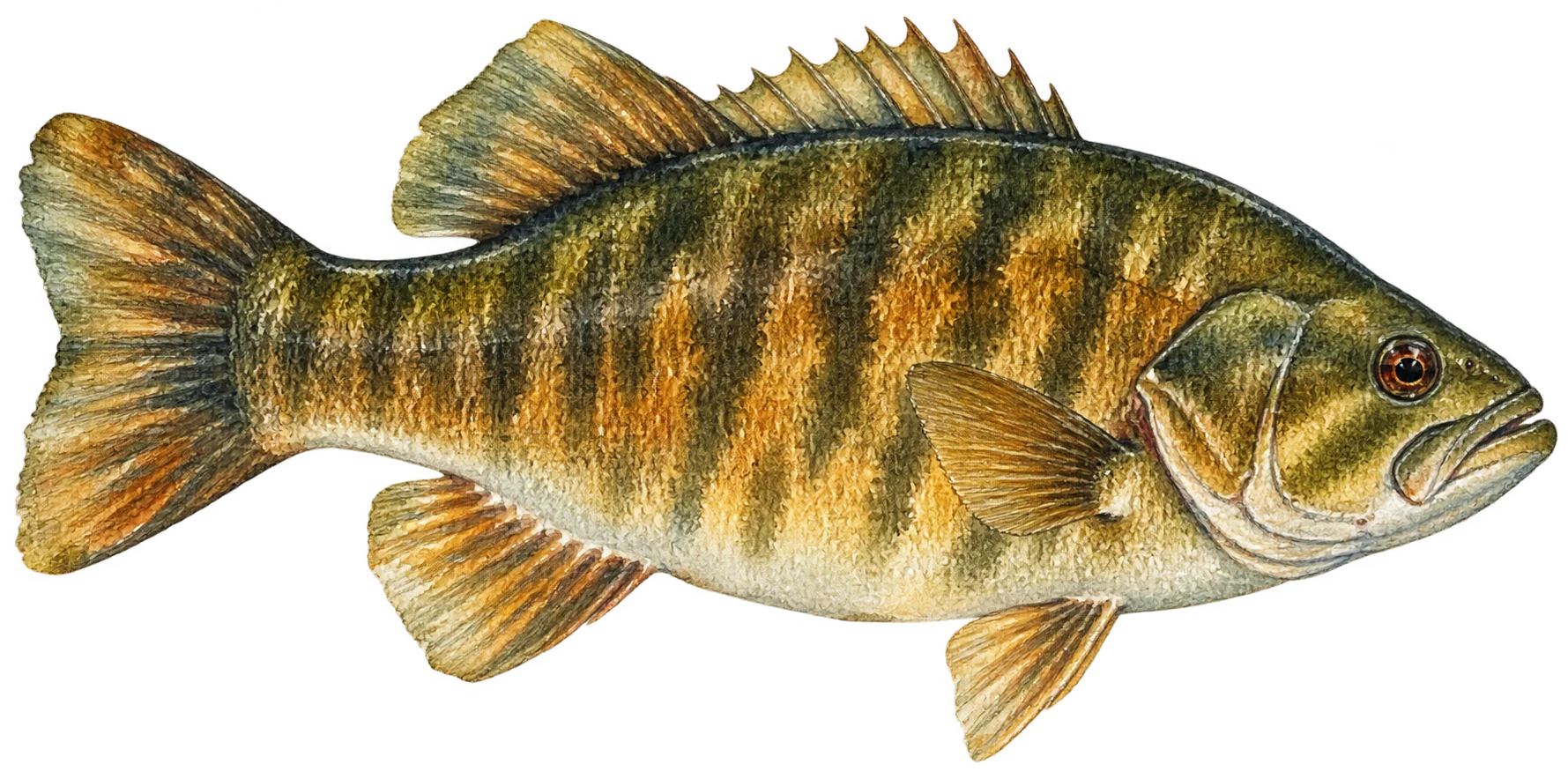
Micropterus dolomieu · also called bronzeback, smallie, brown bass
How to tell it
- Bronze to brown, with dark vertical bars along the side that come and go with their mood.
- With the mouth closed, the upper jaw ends below the eye, not past it.
- Often red or orange eyes, and one continuous dorsal fin with a shallow notch.
Size: Most are 10–16 inches and 1–2 lb. Four pounds is a trophy; six is the fish of a lifetime.
What to throw
The first pick and the backup for every water clarity and light, from the Gear Matcher. Tap one to see the whole kit.
River · Transition water (50–65°F)
Clear water · see 4 ft+ down
Stained water · 1–4 ft of sight
Murky water · under 1 ft
Rain fishes like a cloudy day, so it is left out. These are the everyday picks: in spring and fall the Gear Matcher adds the season’s patterns for some fish.
Our picks for these
- Ned Rig: Z-Man Ned Rig Kit, green pumpkin
- Inline Spinner: Mepps Aglia spinner, #2, brown trout
- Suspending Jerkbait: Rapala X-Rap XR10, silver
- Tube Bait: YUM tube, 4 in, green pumpkin, 6 pack
- Black Spinnerbait (Colorado blade): BOOYAH Moon Talker, black/blue
- Dark Tube Bait: YUM tube, 4 in, watermelon seed, 6 pack
- Crankbait: Rebel Deep Wee Crawfish crankbait, dives 8–10 ft, ditch/brown
- Spinnerbait: BOOYAH Blade Tandem, snow white
- Spinnerbait or Bladed Jig: BOOYAH Blade Double Willow, white/chartreuse
Rod, reel and line
- Rod
- 7' medium spinning
- Reel
- 2500 spinning
- Line
- 6–10 lb fluorocarbon, or 10 lb braid with fluorocarbon leader
- Leader
- Fluorocarbon leader if using braid
Smallmouth live in clear water and inspect baits closely, so lighter, low-visibility line gets more bites.
Where and when
River fishing: plan your approach and read the water.
- Where they live
- Clear water over rock, gravel and sand: rocky points, boulders, ledges and the current breaks of rivers. They need cooler, cleaner water than largemouth.
- Water they like
- Most active from 60 to 75°F.
- Best time
- Early and late, and overcast days with a little wind.
- Spawning
- Late spring, at about 60–65°F: males guard nests on gravel, often beside a boulder, in 2–10 feet of water.
Through the year
Best months for smallmouth bass: May–June and September–October.
- January: slower.
- February: slower.
- March: slower.
- April: good.
- May: best.
- June: best.
- July: good.
- August: good.
- September: best.
- October: best.
- November: good.
- December: slower.
Earlier in the South and later in the North. In rivers they keep biting through the summer.
A general pattern, not a local forecast. Pick your state for a rough adjustment: smallmouth bass follow the water’s warmth, earlier in the South and later in the North.
Spring
Up onto shallow rock and gravel flats to spawn: tubes, jerkbaits and small swimbaits.
Summer
In rivers, the current seams below riffles and around boulders. In lakes, rocky points and humps 10–25 feet down, and topwater at dawn.
Fall
They feed hard on baitfish and crayfish: jerkbaits, swimbaits and crankbaits along rocky banks.
Winter
Deep and slow, in the slowest pools of a river or the deepest rock of a lake: a hair jig or a blade bait, worked slowly.
Tips
- 1.Think crayfish: brown, green-pumpkin and orange baits crawled over the rocks.
- 2.In a river, cast upstream and let your lure tumble down with the current.
- 3.Light line and a quiet approach: they live in clear water and see you coming.
The rules
Spawning season: many states close bass, walleye or pike fishing, or make it catch-and-release, until an opener. Leave fish on their beds alone. Check local regulations.
Through the ice
What to drop
Blade Bait or Jigging Spoon
or Live Minnow under a Tip-Up
- Rod
- 28"–30" medium-light ice rod
- Reel
- 500–1000 spinning
- Line
- 6 lb fluorocarbon
How thick the ice must be
- Under 4"Stay off
- 4"Ice fishing and anything on foot
- 5–7"Snowmobile or ATV
- 8–12"Car or small pickup
- 12–15"Medium truck
For new, clear ice. White or snowy ice is about half as strong, so double these. Check it with a spud bar or auger as you go out, and keep off ice over moving water, near inlets and at pressure ridges. No ice is completely safe.