Fish guide
Northern pike
The ambush hunter of northern lakes and slow rivers: long, fast and toothy, and happy to hit a big, flashy lure.
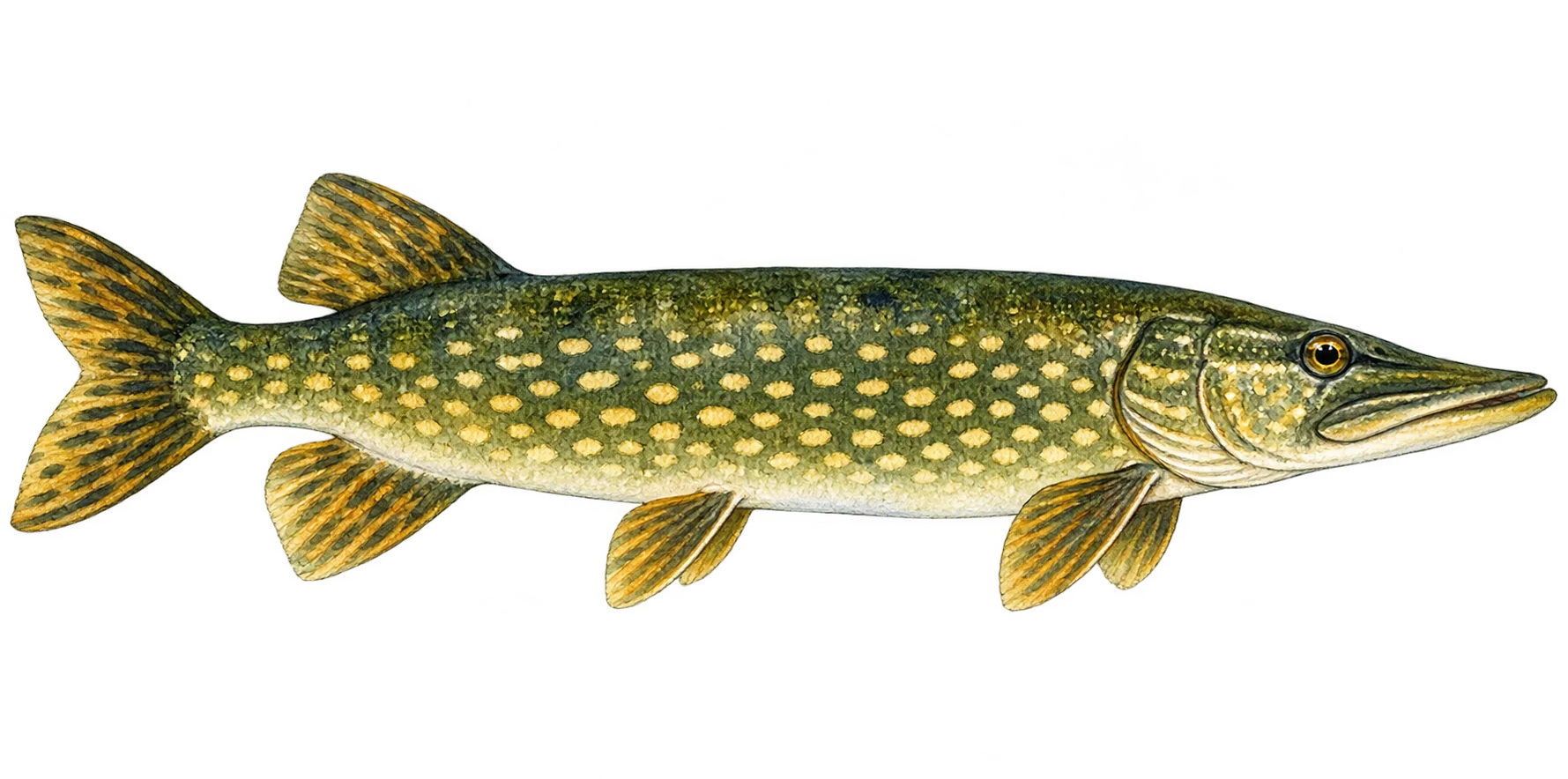
Esox lucius · also called northern, jack, snake, gator
How to tell it
- A long body and a duck-bill snout full of sharp teeth.
- Adults are dark green with rows of pale, bean-shaped spots (young pike have pale bars; a muskie has dark spots or bars on a pale body).
- Dorsal and anal fins set far back, near the tail.
Size: Most are 20–30 inches; a pike over 40 inches is a trophy.
What to throw
The first pick and the backup for every water clarity and light, from the Gear Matcher. Tap one to see the whole kit.
Lake · Transition water (50–65°F)
Clear water · see 4 ft+ down
Stained water · 1–4 ft of sight
Murky water · under 1 ft
Rain fishes like a cloudy day, so it is left out. These are the everyday picks: in spring and fall the Gear Matcher adds the season’s patterns for some fish.
Our picks for these
- Spoon: Eppinger Dardevle red/white nickel-back spoon, 1 oz
- Jerkbait: Rapala Husky Jerk, #10, yellow perch
- Large Inline Spinner: Mepps Aglia dressed #5, silver/gray, 1/2 oz
- Paddle-Tail Swimbait: Storm WildEye Swim Shad, 6 in, Pearl, 3 pack
- Large Black Spinnerbait: BOOYAH Moontalker spinnerbait, 3/4 oz, black/blue
- Spoon: Dardevle Dardevlet spoon, 3/4 oz, red/white
- Spinnerbait or Large Inline Spinner: BOOYAH Pikee Shadtreuse spinnerbait, 1/2 oz
- Bucktail Spinner: Tooth Shield 308 musky bucktail, double #8, crawfish
Rod, reel and line
- Rod
- 7' medium-heavy casting or spinning
- Reel
- 3000–4000 spinning or baitcasting
- Line
- 30–50 lb braid
- Leader
- Required: wire leader or 40–60 lb fluorocarbon
Pike have razor-sharp teeth that cut regular line. A leader is the difference between landing the fish and losing your lure.
Where and when
Lake fishing: plan your approach and read the water.
- Where they live
- Weedy bays, weed edges, and slow, weedy rivers and backwaters. Big pike move to cooler, deeper water in summer.
- Water they like
- Small pike like warmer water; big ones favor cooler water, roughly the 50s to low 60s °F, which is why spring and fall are trophy time.
- Best time
- Daytime: they hunt by sight, so bright days are fine and midday often works.
- Spawning
- Very early spring, right after ice-out, in flooded marshes and shallow bays at about 40–50°F.
Through the year
Best months for northern pike: May and September–November.
- January: good.
- February: good.
- March: slower.
- April: good.
- May: best.
- June: good.
- July: slower.
- August: slower.
- September: best.
- October: best.
- November: best.
- December: slower.
Some states close the season in early spring around the spawn: check yours. In the North, the ice season is good too.
A general pattern, not a local forecast. Ice, runs, stocking and the rules set the season for northern pike, water by water.
Spring
Shallow, warming bays after the spawn: spoons, spinners and suspending jerkbaits.
Summer
Weed edges and deeper weed lines: spinnerbaits, swimbaits, and topwater at dawn. The big ones go deeper.
Fall
Big pike feed hard in the cooling water: large swimbaits, jerkbaits and spoons.
Winter
A favorite through the ice: tip-ups with big shiners or smelt over weed edges, where live bait is legal.
Tips
- 1.Always use a leader: pike teeth cut ordinary line. Wire is the safest; heavy fluorocarbon can still be bitten through.
- 2.Long-nose pliers and a jaw spreader keep your fingers safe.
- 3.Wet your hands, and hold a big pike under the belly.
The rules
Spawning season: many states close bass, walleye or pike fishing, or make it catch-and-release, until an opener. Leave fish on their beds alone. Check local regulations.
Through the ice
What to drop
Tip-Up with a Live or Dead Shiner
or Large Jigging Spoon
- Rod
- Tip-up, or a 36" medium-heavy ice rod
- Reel
- Tip-up spool, or 2500 spinning
- Line
- 30 lb braided tip-up line
- Leader
- Required: wire leader
How thick the ice must be
- Under 4"Stay off
- 4"Ice fishing and anything on foot
- 5–7"Snowmobile or ATV
- 8–12"Car or small pickup
- 12–15"Medium truck
For new, clear ice. White or snowy ice is about half as strong, so double these. Check it with a spud bar or auger as you go out, and keep off ice over moving water, near inlets and at pressure ridges. No ice is completely safe.